Get Free Shipping on orders over $79
Classical and Fuzzy Concepts in Mathematical Logic and Applications, Professional Version - Mircea S. Reghis

Classical and Fuzzy Concepts in Mathematical Logic and Applications, Professional Version

By: Mircea S. Reghis, Eugene Roventa

eText | 26 January 2022 | Edition Number 1

At a Glance

eText


$112.19

or 4 interest-free payments of $28.05 with

 or 

Instant online reading in your Booktopia eTextbook Library *

Why choose an eTextbook?

Instant Access *

Purchase and read your book immediately

Read Aloud

Listen and follow along as Bookshelf reads to you

Study Tools

Built-in study tools like highlights and more

* eTextbooks are not downloadable to your eReader or an app and can be accessed via web browsers only. You must be connected to the internet and have no technical issues with your device or browser that could prevent the eTextbook from operating.

Classical and Fuzzy Concepts in Mathematical Logic and Applications provides a broad, thorough coverage of the fundamentals of two-valued logic, multivalued logic, and fuzzy logic.
Exploring the parallels between classical and fuzzy mathematical logic, the book examines the use of logic in computer science, addresses questions in automatic deduction, and describes efficient computer implementation of proof techniques.
Specific issues discussed include:

Propositional and predicate logic

Logic networks

Logic programming

Proof of correctness

Semantics

Syntax

Completenesss

Non-contradiction

Theorems of Herbrand and Kalman
The authors consider that the teaching of logic for computer science is biased by the absence of motivations, comments, relevant and convincing examples, graphic aids, and the use of color to distinguish language and metalanguage. Classical and Fuzzy Concepts in Mathematical Logic and Applications discusses how the presence of these facts trigger a stirring, decisive insight into the understanding process. This view shapes this work, reflecting the authors' subjective balance between the scientific and pedagogic components of the textbook.
Usually, problems in logic lack relevance, creating a gap between classroom learning and applications to real-life problems. The book includes a variety of application-oriented problems at the end of almost every section, including programming problems in PROLOG III. With the possibility of carrying out proofs with PROLOG III and other software packages, readers will gain a first-hand experience and thus a deeper understanding of the idea of formal proof.

on
Desktop
Tablet
Mobile

More in Mathematics

Men of Mathematics - E.T. Bell

eBOOK

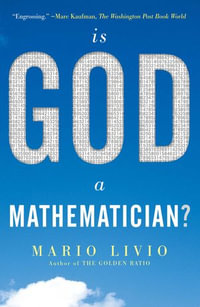
Is God a Mathematician? - Mario Livio

eBOOK

The FTL Paper : Book Five - Tomas Londan

eBOOK