Get Free Shipping on orders over $79
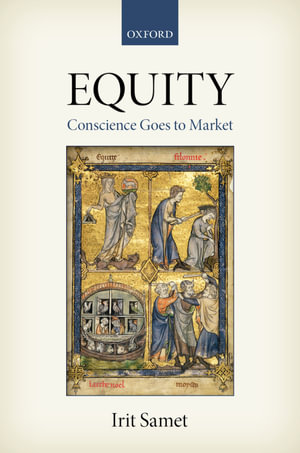
Equity : Conscience Goes to Market - Irit Samet

Equity

Conscience Goes to Market

By: Irit Samet

eText | 6 December 2018

At a Glance

eText


$113.19

or 4 interest-free payments of $28.30 with

 or 

Instant online reading in your Booktopia eTextbook Library *

Why choose an eTextbook?

Instant Access *

Purchase and read your book immediately

Read Aloud

Listen and follow along as Bookshelf reads to you

Study Tools

Built-in study tools like highlights and more

* eTextbooks are not downloadable to your eReader or an app and can be accessed via web browsers only. You must be connected to the internet and have no technical issues with your device or browser that could prevent the eTextbook from operating.

This book sets out to defend the claim that Equity ought to remain a separate body of law; the temptation to iron-out the differences between neighbouring doctrines on the two sides of the Equity/Common Law divide should, in most cases, be resisted. The theoretical part of the book is argues that the characteristics of Equity, namely, appeal to conscience, flexibility, retroactivity and the use of morally-freighted jargon, are essential for the implementation of a legal ideal that has been neglected by the Common Law: âAccountability Correspondenceâ. According to this fundamental legal ideal, liability imposed by legal rules should correspond to the pattern of moral duty in the circumstances to which the rules apply. Equity promotes this ideal in the fields of property and obligations by disallowing parties to exploit the rule-like nature of Common Law norms in a way that breaches their moral duty to the other party. By reference to various equitable doctrines, it is argued that the faults identified by critics of Equity, especially from the perspective of the Rule of Law, are highly exaggerated, and that the criticism often reflects a political belief in the supremacy of individualism and free market over empathy and social justice. The theoretical part is followed by three chapters, each dedicated to an in-depth analysis of the equitable doctrines of fiduciary duties, proprietary estoppel, and clean hands. For each doctrine, it is shown how their equitable characteristics are indispensable for achieving their social, ethical and economic purpose.

on
Desktop
Tablet
Mobile

More in Equity & Trusts

Ready for Anything - Catriona MacLennan

eBOOK

Essays on the History of Equity - Dr David Foster

eBOOK

RRP $180.00

$162.99

Equity and Trusts - Katharine Davies

eBOOK

RRP $69.46

$62.99

Estate Planning Basics - Editors of Nolo

eBOOK

RRP $39.59

$31.99

19%
OFF
The wealth Fortress - Mr. Freeny

eBOOK

Make Your Living Trust - Editors of Nolo Editors of Nolo

eBOOK

RRP $58.29

$46.99

19%
OFF