Get Free Shipping on orders over $79
How Linux Works, 3rd Edition : What Every Superuser Should Know - Brian Ward
eTextbook alternate format product

Instant online reading.
Don't wait for delivery!

Go digital and save!

How Linux Works, 3rd Edition

What Every Superuser Should Know

By: Brian Ward

Paperback | 20 July 2021

At a Glance

Paperback


RRP $95.00

$71.99

24%OFF

or 4 interest-free payments of $18.00 with

 or 

Ships in 5 to 7 business days

Best selling guide to the inner workings of the Linux operating system with over 50,000 copies sold since its release in 2014. This in-depth guide to the various components of a Linux system covers topics like how the system boots, how networking works, and what the Linux kernel actually does.

Linux for the Superuser

Unlike some operating systems, Linux doesn’t try to hide the important bits from you it gives you full control of your computer. But to truly master Linux, you need to understand its internals, like how the system boots, how networking works, and what the kernel actually does.

In this third edition of the bestselling How Linux Works, author Brian Ward peels back the layers of this well-loved operating system to make Linux internals accessible. This edition has been thoroughly updated and expanded with added coverage of Logical Volume Manager (LVM), virtualization, and containers.

You'll learn:
  • How Linux boots, from boot loaders to init (systemd)
  • How the kernel manages devices, device drivers, and processes
  • How networking, interfaces, firewalls, and servers work
  • How development tools work and relate to shared libraries
  • How to write effective shell scripts
You’ll also explore the kernel and examine key system tasks inside user-space processes, including system calls, input and output, and filesystem maintenance. With its combination of background, theory, real-world examples, and thorough explanations, How Linux Works, 3rd Edition will teach you what you need to know to take control of your operating system. NEW TO THIS EDITION:
  • Hands-on coverage of the LVM, journald logging system, and IPv6
  • Additional chapter on virtualization, featuring containers and cgroups
  • Expanded discussion of systemd
Covers systemd-based installations
Industry Reviews
"Comprehensive . . . The third edition of How Linux Works is a good introduction to Linux that also is organized such that readers can flip through and go as far into a subject as necessary to answer questions at hand, skipping the more extensive explanations that aren’t crucial for their current topic of interest. In that regard, the book is a nice reference to have on the bookshelf."
Lee Teschler Microcontroller Tips Reviews for How Linux Works: “If you are interested in Linux, How Linux Works: What Every Superuser Should Know is a must-read title.” LinuxInsider

“Lots to offer on almost every aspect of the Linux architecture.”
Everyday Linux User

“You’ll get an essential understanding of what’s going on under the hood without getting bogged down in minutiae making this a very refreshing (and wholly recommended) addition to the Linux literature.”
Phil Bull co-author of Ubuntu Made Easy and member of the Ubuntu documentation team

“Dives straight into the transparent depths of Linux-based operating systems and shows us how all the pieces fit together.”
DistroWatch

“Earns its place on the shelf as an essential reference.”
The MagPi magazine

More in Computer Programming & Software Development

Coding For Dummies, All New Edition : For Dummies (Computer/Tech) - Paul McFedries
Addiction by Design : Machine Gambling in Las Vegas - Natasha Dow Schll
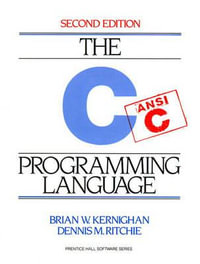
The C Programming Language : Prentice Hall Software - Brian Kernighan

RRP $107.04

$72.99

32%
OFF
Coding For Kids For Dummies : For Kids for Dummies - Camille McCue
Python All-in-One For Dummies : 3rd Edition - John C. Shovic

RRP $74.95

$55.75

26%
OFF
The Art of Game Design : A Book of Lenses, Third Edition - Jesse  Schell
Web Engineering : Theory and Practice - Jeremiah Downey
The Essence of Software Engineering - Cersei Page
Introduction to Programming Languages - Gordon Hurley
Typesetting Mathematics With Latex - Robert Legato
Practical Probabilistic Programming - Stefan Nordin