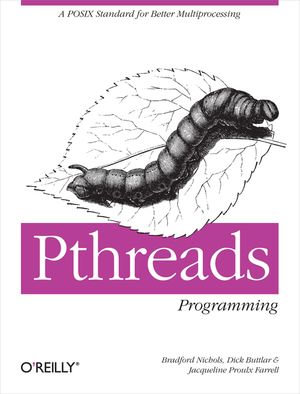
Computers are just as busy as the rest of us nowadays. They have lots of tasks to do at once, and need some cleverness to get them all done at the same time.That's why threads are seen more and more often as a new model for programming. Threads have been available for some time. The Mach operating system, the Distributed Computer Environment (DCE), and Windows NT all feature threads.One advantage of most UNIX implementations, as well as DCE, is that they conform to a recently ratified POSIX standard (originally 1003.4a, now 1003.1c), which allows your programs to be portable between them. POSIX threads are commonly known as pthreads, after the word that starts all the names of the function calls. The standard is supported by Solaris, OSF/1, AIX, and several other UNIX-based operating systems.The idea behind threads programming is to have multiple tasks running concurrently within the same program. They can share a single CPU as processes do, or take advantage of multiple CPUs when available. In either case, they provide a clean way to divide the tasks of a program while sharing data.A window interface can read input on dozens of different buttons, each responsible for a separate task. A network server has to accept simultaneous calls from many clients, providing each with reasonable response time. A multiprocessor runs a number-crunching program on several CPUs at once, combining the results when all are done. All these kinds of applications can benefit from threads.In this book you will learn not only what the pthread calls are, but when it is a good idea to use threads and how to make them efficient (which is the whole reason for using threads in the first place). The authors delves into performance issues, comparing threads to processes, contrasting kernel threads to user threads, and showing how to measure speed. He also describes in a simple, clear manner what all the advanced features are for, and how threads interact with the rest of the UNIX system.Topics include:
- Basic design techniques
- Mutexes, conditions, and specialized synchronization techniques
- Scheduling, priorities, and other real-time issues
- Cancellation
- UNIX libraries and re-entrant routines
- Signals
- Debugging tips
- Measuring performance
- Special considerations for the Distributed Computing Environment (DCE)